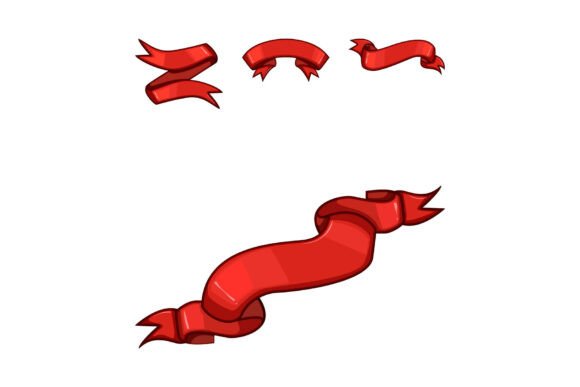
Red Ribbon Banner Scroll Design Elements: Elevating Visual Communication
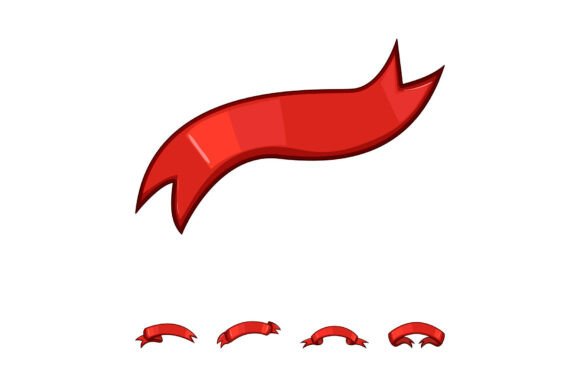
In the crowded digital landscape, where attention spans are measured in seconds, visual hierarchy is not just an aesthetic choice—it is a functional necessity. Among the most enduring and versatile tools in a designer’s arsenal are Red Ribbon Banner Scroll Design Elements. These graphics, characterized by their flowing curves, bold coloration, and classic scroll-like shapes, serve as powerful anchors for text and focal points in any composition. Whether used for high-stakes corporate promotions, festive celebrations, or everyday decorative labels, these elements bridge the gap between traditional elegance and modern clarity.
The relevance of red ribbon banners extends far beyond mere decoration. They act as visual cues that guide the viewer’s eye, signaling importance and urgency without the aggressive tone of standard alert boxes. As businesses and creators seek to humanize their brands and add warmth to their communications, the organic flow of a ribbon offers a welcome contrast to the rigid grids of web design and print layouts.
The Evolution of Decorative Labels in Modern Workflows
Historically, ribbon banners were staples of physical print media—adorned on product packaging, event posters, and storefront signage. The transition to digital media initially threatened to render such ornate designs obsolete in favor of minimalism. However, we are currently witnessing a resurgence of maximalist and neo-retro design trends. Users are increasingly fatigued by sterile, flat interfaces. In response, designers are reintroducing depth, texture, and classical motifs, with scroll-like shapes leading the charge.
This shift is not merely nostalgic; it is strategic. Modern workflows demand assets that are versatile across multiple platforms. A single set of red ribbon banners must look equally compelling on a mobile screen, a desktop landing page, and a printed flyer. This versatility has driven the creation of comprehensive design element sets that offer various orientations, lengths, and styles. Creators no longer need to draw these complex vectors from scratch; instead, they leverage pre-made, high-quality assets that can be customized to fit specific brand guidelines.
Why Red Remains the Color of Choice
Color psychology plays a pivotal role in the effectiveness of these design elements. Red is universally associated with energy, passion, urgency, and celebration. When applied to banner scrolls, it creates an immediate visual impact that demands attention. For marketers, this makes red ribbons ideal for:
- Promotional Campaigns: Highlighting discounts, flash sales, or limited-time offers.
- Announcements: Drawing focus to new product launches or company milestones.
- Celebrations: Adding a festive touch to holiday greetings, awards, and achievements.
However, the use of red requires balance. Overuse can lead to visual fatigue. The beauty of well-crafted Red Ribbon Banner Scroll Design Elements lies in their ability to provide a strong accent without overwhelming the surrounding content. When paired with neutral backgrounds or complementary colors like gold, white, or deep navy, red ribbons create a sophisticated contrast that enhances readability rather than detracting from it.
Practical Applications for Professionals and Creators
For entrepreneurs and small business owners, time is a scarce resource. The ability to quickly produce professional-grade marketing materials is crucial. Utilizing a set of red ribbon banners allows for rapid prototyping and deployment of visual assets. Consider a local bakery launching a new seasonal cake. Instead of commissioning a custom illustration, the owner can select a scroll-shaped ribbon from a design library, overlay the product name, and adjust the hue to match their branding. This efficiency does not compromise quality; rather, it ensures consistency across all touchpoints.
Educators and bloggers also benefit significantly from these elements. In long-form content, breaking up text with visual markers improves retention. A red ribbon banner can serve as a chapter header, a quote highlight, or a call-to-action button background. This approach transforms static text into an engaging narrative experience, keeping readers invested from start to finish.
Integrating Ribbons into Digital and Print Media
The technical execution of these designs has evolved alongside software capabilities. Modern vector-based ribbon elements are scalable without loss of quality, making them ideal for both high-resolution print and responsive web design. Here are some best practices for integration:
- Maintain Hierarchy: Use larger, more elaborate scrolls for primary headlines and simpler, thinner ribbons for subheaders or secondary information.
- Ensure Readability: Always place text on the flattest part of the ribbon. Avoid curving text along extreme bends unless using specialized typography tools, as this can hinder legibility.
- Consistent Styling: If your brand uses flat design, choose ribbons with minimal shading. For a more vintage or luxurious feel, opt for elements with gradients and drop shadows.
By adhering to these principles, creators can ensure that their use of versatile design elements enhances rather than clutters the user experience. The goal is always to support the message, not to overshadow it.
Adapting to Changing User Expectations
Today’s audiences are sophisticated consumers of visual content. They expect polish, coherence, and intentionality in every design they encounter. Generic clip-art aesthetics are no longer acceptable. This has raised the bar for stock design elements, pushing providers to create more nuanced and artistically refined Red Ribbon Banner Scroll Design Elements.
We are seeing a trend toward hybrid styles—ribbons that combine the clean lines of modern minimalism with the ornamental details of classical heraldry. These hybrid designs appeal to a broad demographic, satisfying the professional’s need for cleanliness and the creative’s desire for character. Furthermore, accessibility considerations are becoming paramount. Designers are increasingly mindful of color contrast ratios, ensuring that white text on a red ribbon remains readable for users with visual impairments.
The Role of Customization in Brand Identity
While pre-made sets offer convenience, customization is key to standing out. Many modern design libraries provide editable vector files that allow users to tweak the curvature, length, and color saturation of each ribbon. This level of control enables businesses to align these decorative elements strictly with their brand identity. For instance, a tech startup might desaturate the red to a softer coral tone to appear more approachable, while a law firm might deepen it to a burgundy for a sense of authority and tradition.
This adaptability ensures that scroll-like shapes remain relevant across diverse industries. From healthcare announcements to fashion lookbooks, the fundamental structure of the ribbon remains constant, but its application shifts to meet specific contextual needs.
Future-Proofing Your Design Assets
As we look toward the future of visual communication, the demand for flexible, high-quality graphic elements will only grow. The rise of augmented reality (AR) and interactive media presents new opportunities for ribbon designs. Imagine a digital invitation where the red ribbon animates, unfurling to reveal event details. Or a packaging design where scanning a QR code triggers a 3D ribbon animation on the user’s phone. While these technologies are still emerging, having a robust library of 2D ribbon assets provides the foundational geometry needed for such 3D modeling and animation.
Moreover, the sustainability movement in design encourages the reuse and repurposing of assets. Investing in a comprehensive set of Red Ribbon Banner Scroll Design Elements is a sustainable practice. It reduces the need to create new graphics for every project, lowering both carbon footprints associated with digital storage and processing power, and the time costs for designers.
In conclusion, the enduring appeal of red ribbon banners lies in their unique ability to convey importance and celebration through form and color. They are not just decorative afterthoughts but essential components of effective visual storytelling. By understanding their psychological impact, technical requirements, and adaptive potential, professionals and creators can leverage these elements to craft more engaging, clear, and aesthetically pleasing communications. Whether you are designing a simple label or a complex promotional campaign, integrating these versatile scroll shapes can elevate your work from ordinary to exceptional.