Visceral Design: How Dripping Slime Frames Creating Colorful Borders Are Redefining Digital Engagement
In the saturated landscape of digital media, capturing attention requires more than just clean lines and minimalist aesthetics. There is a growing movement toward tactile, sensory-rich visuals that evoke emotion and playfulness. At the forefront of this shift is the trend of Dripping Slime Frames Creating Colorful compositions. These are not merely decorative borders; they are strategic design elements that leverage texture, fluidity, and vibrant saturation to break the monotony of standard rectangular layouts. For professionals, creators, and marketers, understanding the utility and psychological impact of these gooey, liquid textures is essential for staying relevant in an increasingly experience-driven market.
The Psychology of Playful Textures in Professional Design
Why are designers and brands turning to what appears to be childish imagery? The answer lies in the concept of "digital tactility." As our interactions with screens become more sterile and glass-dominated, there is a subconscious craving for organic, messy, and tangible elements. Dripping Slime Frames Creating Colorful visual experiences tap into this desire by introducing a sense of movement and physical presence to flat digital spaces.
This approach aligns with broader consumer trends favoring authenticity and joy. In marketing, this is often referred to as "dopamine design"—creating visuals that trigger immediate positive emotional responses. When a user encounters a poster or social media template featuring vibrant, dripping borders, the brain registers the novelty and energy of the image. It signals that the content within is fun, approachable, and dynamic. This is particularly effective for industries targeting younger demographics, but it is also gaining traction in lifestyle and entertainment sectors where breaking corporate stiffness is a priority.
Bridging the Gap Between Niche Aesthetics and Mainstream Appeal
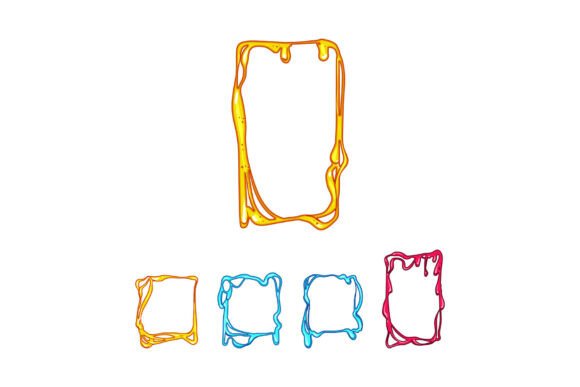
Initially popularized in gaming communities and youth-centric subcultures, slime aesthetics have permeated mainstream graphic design. The evolution from niche meme culture to professional asset libraries demonstrates a significant shift in design tolerance. Brands are no longer afraid to appear "messy" if that messiness conveys creativity and energy. By utilizing four colorful gooey frames with dripping liquid textures, designers can create playful, vibrant borders that serve as fun decorative elements for kids party designs, posters, backgrounds, and templates without sacrificing professional quality.
The key to successful implementation is balance. The slime element acts as a frame, directing the eye inward while providing a chaotic, energetic boundary. This contrast between the structured content area and the fluid border creates visual tension that keeps the viewer engaged. It is a practical application of Gestalt principles, where the irregular shape of the drip guides the eye more effectively than a static straight line.
Practical Applications Across Industries
The versatility of these assets extends far beyond children’s parties. While they are undeniably perfect for birthday invitations and school event flyers, their application in commercial contexts is expanding. Here is how various professionals are integrating these elements into their workflows:
- Social Media Marketing: In feeds dominated by uniform grids, a post featuring a dripping slime frame stands out. It stops the scroll by offering a burst of color and texture that differs from the typical polished influencer aesthetic.
- Educational Content: Teachers and educational publishers use these frames to make worksheets and digital presentations more engaging for students. The playful nature reduces anxiety around learning materials and increases retention through visual interest.
- Event Branding: For music festivals, pop-up shops, and experiential marketing events, these frames can be used in digital signage and promotional videos to convey a sense of high energy and immersion.
- Product Packaging: Even in physical print, the illusion of dripping liquid can be enhanced with spot UV coatings or embossing, creating a multi-sensory unboxing experience for products like candies, toys, or trendy cosmetics.
Enhancing Workflow Efficiency with Pre-Made Assets
For freelancers and agencies, time is a critical resource. Creating complex liquid textures from scratch using 3D modeling software or advanced Photoshop techniques is time-consuming. This is why the availability of high-quality, ready-to-use assets is transforming creative workflows. By leveraging pre-designed Dripping Slime Frames Creating Colorful templates, designers can focus on customization rather than creation.
These assets typically come with transparent backgrounds and layered structures, allowing for easy integration into existing projects. A marketer can drop a vibrant green slime frame over a product photo, adjust the blending mode, and have a campaign-ready graphic in minutes. This efficiency does not compromise quality; instead, it allows for rapid iteration and A/B testing of different color schemes and styles to see what resonates best with the target audience.
The Technical Evolution of Liquid Graphics
The rise of these designs is also supported by advancements in web technology and display capabilities. Modern screens offer higher resolution and better color accuracy, making the subtle gradients and translucent qualities of slime textures look realistic and appealing. Furthermore, CSS and SVG advancements allow for some level of animation, meaning these static frames can eventually evolve into interactive elements on websites.
Imagine a landing page where the border subtly pulses or drips slowly as the user scrolls. This level of interactivity enhances user experience (UX) by providing feedback and maintaining engagement. While currently most common in static images, the trajectory points toward more dynamic implementations. Designers who familiarize themselves with these assets now are positioning themselves to take advantage of future interactive design trends.
Color Theory and Vibrancy
The effectiveness of four colorful gooey frames relies heavily on color theory. The "slime" aesthetic thrives on high-saturation, neon, and pastel palettes that contrast sharply with neutral backgrounds. Common combinations include electric blue against white, hot pink against black, or lime green against dark purple. These choices are not arbitrary; they are designed to maximize visibility and emotional impact.
When selecting colors for these frames, consider the brand identity and the message. Bright, warm colors like orange and yellow evoke excitement and urgency, suitable for sales or limited-time offers. Cooler tones like blue and purple suggest creativity and calm, ideal for educational or tech-related content. The dripping effect adds a layer of depth, making the colors appear three-dimensional and rich, which enhances the perceived value of the design.
Strategic Integration for Maximum Impact
To effectively use these elements, one must understand context. Overuse can lead to visual clutter, diminishing the impact. The best practice is to use the slime frame as a focal point enhancer. Place the most important information—whether it is a call-to-action button, a headline, or a product image—within the safe zone of the frame. Let the dripping edges draw attention to this core content without obscuring it.
- Define the Purpose: Determine if the goal is to entertain, inform, or sell. Adjust the intensity of the slime effect accordingly.
- Maintain Readability: Ensure that text placed over or near the dripping elements has sufficient contrast. Use solid background boxes if necessary to preserve legibility.
- Consistency is Key: If using these frames across a campaign, maintain consistent color palettes and drip styles to build brand recognition.
- Test Across Devices: Verify that the intricate details of the dripping texture render correctly on mobile devices, where screen real estate is limited.
In conclusion, the trend of Dripping Slime Frames Creating Colorful visual boundaries is more than a fleeting fad. It represents a broader shift towards expressive, tactile, and emotionally resonant design. By embracing these playful yet professional elements, creators and businesses can differentiate themselves in a crowded digital marketplace. Whether used for a child’s birthday invitation or a bold marketing campaign, these vibrant, gooey frames offer a unique way to connect with audiences on a visceral level. As technology continues to evolve, the potential for these assets to become even more interactive and immersive grows, making them a valuable addition to any modern designer’s toolkit.