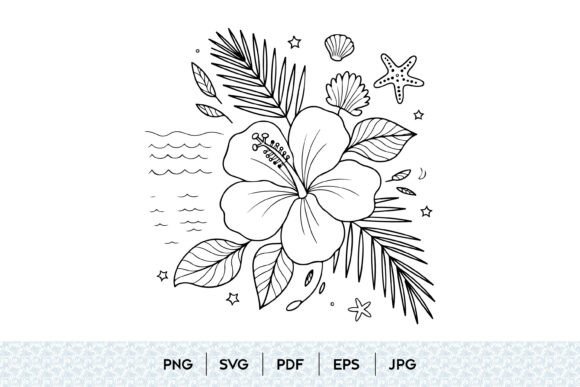
Tropical Hibiscus Line Art Guide
The allure of the tropics often lies in its simplicity: warm breezes, vibrant colors, and distinct botanical shapes. Among these, the hibiscus stands out as an iconic symbol of island life and summer relaxation. Tropical Hibiscus Line Art captures this essence by stripping away complex shading and color gradients, leaving behind clean, elegant contours that define the flower’s form. This minimalist approach transforms a bold botanical subject into a versatile design element suitable for a wide array of creative and commercial applications.
Whether you are a graphic designer looking for scalable vectors or a hobbyist seeking printable decor, understanding the utility of this specific art style can significantly enhance your projects. The appeal of black line art lies in its adaptability. It serves as a blank canvas for customization while maintaining a sophisticated, modern aesthetic that fits seamlessly into contemporary design trends.
Why Minimalist Botanicals Matter
In an era of visual noise, clarity is valuable. A hibiscus outline or contour drawing offers immediate recognition without overwhelming the viewer. This makes it an excellent choice for branding, packaging, and interior decor where subtlety is preferred over loud statements. The tropical line art style bridges the gap between organic nature and structured design, providing a sense of calm and order.
For many, the decision to use line art over full-color illustrations comes down to flexibility. A monochrome illustration can be easily recolored to match any brand palette or interior scheme. It prints cleanly on various materials, from textured paper to fabric, without the risk of color banding or resolution loss associated with complex raster images. This reliability is crucial for professionals who need consistent results across different media.
Perspectives for Creators and Designers
Graphic designers and digital artists often prioritize file versatility and editability. When sourcing floral vector assets, the availability of formats like SVG, EPS, and PDF is non-negotiable. These formats allow for infinite scaling without pixelation, ensuring that a small icon on a business card looks as crisp as a large banner at a trade show.
- SVG and EPS: Ideal for web design and professional printing. They remain editable in software like Adobe Illustrator or Inkscape, allowing designers to adjust stroke weights or modify shapes.
- PNG and JPG: Useful for quick previews, social media posts, or projects where vector editing is not required. High-resolution PNGs with transparent backgrounds are particularly valuable for layering designs.
- PDF: Perfect for printable artwork and documents, ensuring that the layout remains intact across different devices and printers.
For a freelance marketer creating a summer campaign for a beach resort, using an editable SVG of a hibiscus allows for rapid iteration. They can quickly change the line thickness to match the brand’s typography or integrate the flower into a larger ocean theme composition featuring palm leaves and starfish. This speed and flexibility directly impact productivity and client satisfaction.
Value for Small Business Owners and Entrepreneurs
Small business owners, particularly those in the handmade or print-on-demand sectors, rely on high-quality assets to create sellable products. A tropical botanical design can be applied to tote bags, t-shirts, mugs, and stationery. The key consideration here is commercial viability and ease of production.
Line art is cost-effective because it uses less ink in printing processes compared to full-color images. For a shop owner selling printable artwork, offering black-and-white floral sketches allows customers to print at home without needing expensive color cartridges. This lowers the barrier to entry for buyers and expands the potential market.
Moreover, the exotic flower motif has enduring popularity. It appeals to consumers seeking beach vibes and coastal aesthetics year-round. By incorporating tropical leaves and hibiscus outlines into product lines, entrepreneurs can tap into a stable niche of nature-inspired decor. The timeless quality of line drawing ensures that the designs do not feel dated quickly, providing long-term usefulness for inventory.
Educational and Hobbyist Applications
Educators and parents often look for resources that encourage creativity and fine motor skill development. Botanical drawing templates serve as excellent tools for teaching observation and hand-eye coordination. Children and beginners can use these outlines for coloring activities, learning about plant structures, or practicing their own sketching techniques.
For hobbyists interested in crafts such as embroidery, wood burning, or laser cutting, clean line drawings are essential. A clear hibiscus outline provides a precise path for needles or lasers to follow. The simplicity of the design reduces the complexity of the craft, making it accessible to those with intermediate skills while still yielding professional-looking results.
An educator teaching a unit on tropical ecosystems might use these illustrations to create worksheets or presentation slides. The monochrome illustration style ensures that text remains readable and that the focus stays on the educational content rather than distracting background elements. It supports clear communication and enhances the learning experience.
Choosing the Right Format for Your Needs
Selecting the appropriate file type depends largely on your intended use case. Understanding the strengths of each format helps in making informed decisions that save time and resources.
- For Web and Digital Use: Choose SVG for interactive elements and logos, as it loads quickly and scales perfectly on all screen sizes. Use PNG for static images where transparency is needed.
- For Professional Printing: EPS and PDF are the standards. They preserve vector data, ensuring sharp edges and accurate colors when sent to professional print shops.
- For Home Printing and Crafts: JPG and PDF are user-friendly. Most home printers and craft machines accept these formats without requiring specialized software.
Consider the level of customization you require. If you plan to alter the design significantly, such as combining it with other seashell art or starfish illustration elements, vector formats are indispensable. They allow you to manipulate individual paths and nodes. If you only need to resize or place the image as-is, raster formats like JPG may suffice.
Integrating Tropical Elements into Design
To maximize the impact of Tropical Hibiscus Line Art, consider how it interacts with other design elements. Pairing the delicate lines of a hand drawn flower with bold typography creates a striking contrast. Using negative space effectively can highlight the intricate details of the botanical illustration.
Think about the mood you wish to convey. A single, isolated hibiscus suggests elegance and minimalism, suitable for luxury branding or sophisticated home decor. A cluster of tropical leaves and flowers creates a sense of abundance and vibrancy, ideal for event invitations or summer promotions. The context determines the arrangement and scale of the artwork.
Ultimately, the value of this art form lies in its ability to evoke a specific atmosphere—relaxed, natural, and inviting. Whether used for a corporate logo, a classroom activity, or a personal craft project, tropical design elements offer a versatile and aesthetically pleasing solution. By matching the file format and style to your specific goals, you can leverage these assets to enhance creativity and achieve professional results.